Why Glendale Puts More Work on Your AC Than Most Places
If you live in Glendale, your air conditioner works harder than the one in a house in Ohio or Oregon. That's not a sales line. It's just what happens when the outdoor temperature sits above 100 degrees for weeks at a stretch and your system has to pull heat out of the house the whole time.
FEMA's National Risk Index rates Maricopa County Very High for heat waves, and that rating shows up in your utility bill and your equipment. Long runtimes mean compressors, capacitors and fan motors age faster than the manufacturer's charts assume. Most of the HVAC service calls we see in the middle of July are systems that have been running flat out since May.
A lot of Glendale homes were built around 1988, which means many of them still have older ductwork, original insulation or systems that were sized for a different era of home use. An older house with a tired air handler and thin attic insulation will struggle in a way a newer build won't.
Monsoon Season Does More Damage Than People Expect
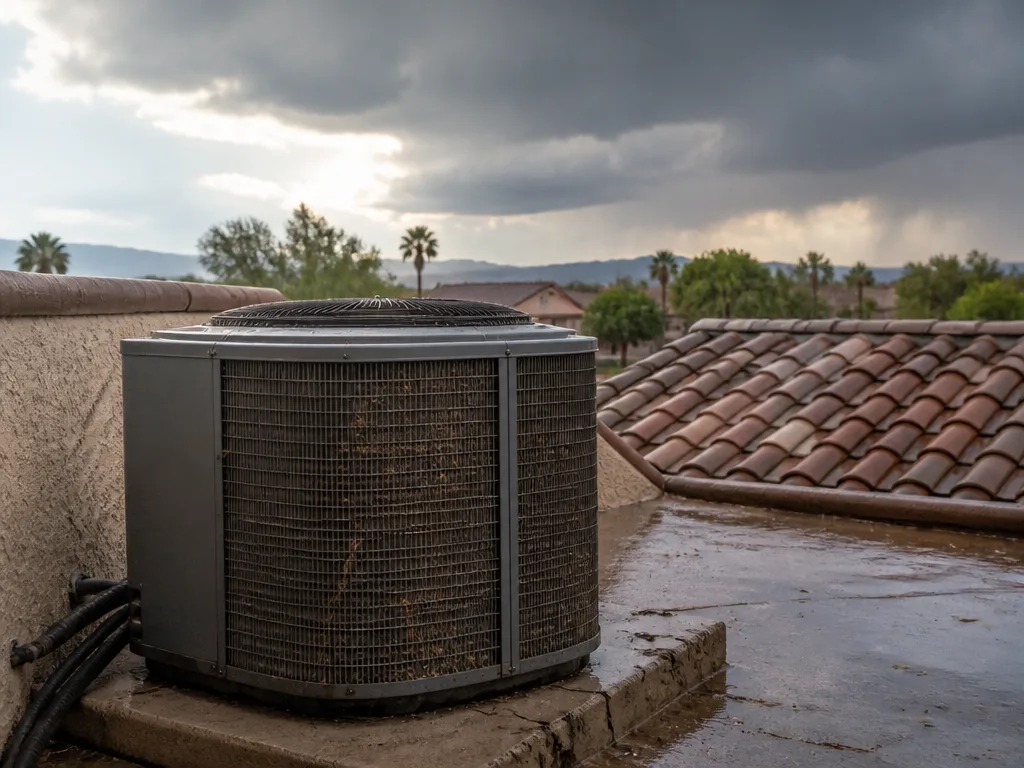
June through September brings monsoon storms, and they are not just a rain event. NOAA logged 257 damaging-wind reports, 22 hail reports and 144 flood reports across Maricopa County from 2022 through 2024. Those numbers matter for your outdoor unit.
Wind pushes dust, cottonwood debris and bits of shingle into the condenser coil. Once that coil is packed, the system can't reject heat, pressures climb, and you get a unit that runs but never quite cools. Hail can bend the fins on the condenser, and fins that are bent even a little reduce airflow across the coil.
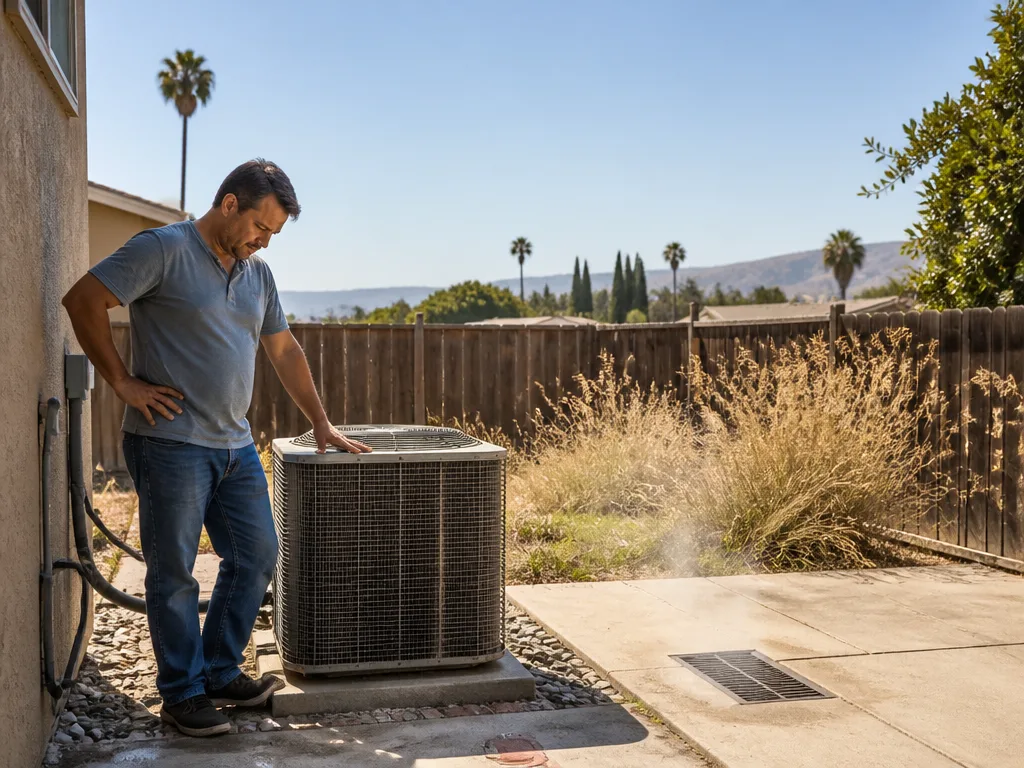
Flooding is the sneaky one. If the pad your condenser sits on takes water, or the surrounding ground settles, the unit can end up tilted or partially submerged. Check after every big storm. Look for debris, standing water, bent fins and any sign the unit has shifted off level.
- Clear leaves, dust and grass clippings from around the outdoor unit at least two feet out on every side.
- Look at the fins after a hailstorm. Small dents are normal. Flattened sections are not.
- Shut the system off if water reaches the bottom of the cabinet, then call before you restart it.
Electric Heating and Cooling Changes the Math
About 75 percent of Glendale homes heat with electricity, and roughly 21 percent use natural gas. That split changes how we think about your system in winter. A heat pump is doing both jobs, and in the desert winter it's usually running on mild nights and sunny afternoons. The part that wears out is the reversing valve and the defrost controls, and those only get checked if someone looks.
If you have an electric furnace or an air handler with electric backup heat, the cold snaps in December and January are short but sharp. A system that hasn't been looked at since the last summer can surprise you on the first chilly morning. Get the thermostat, the filter and the electrical connections checked before the season turns.
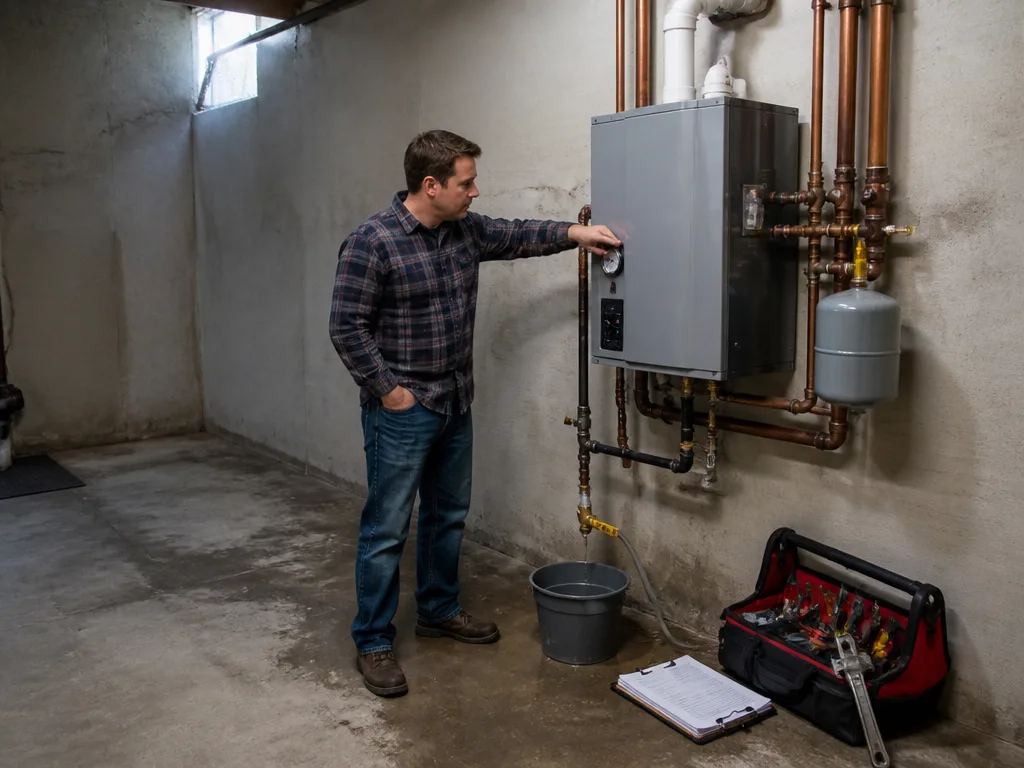
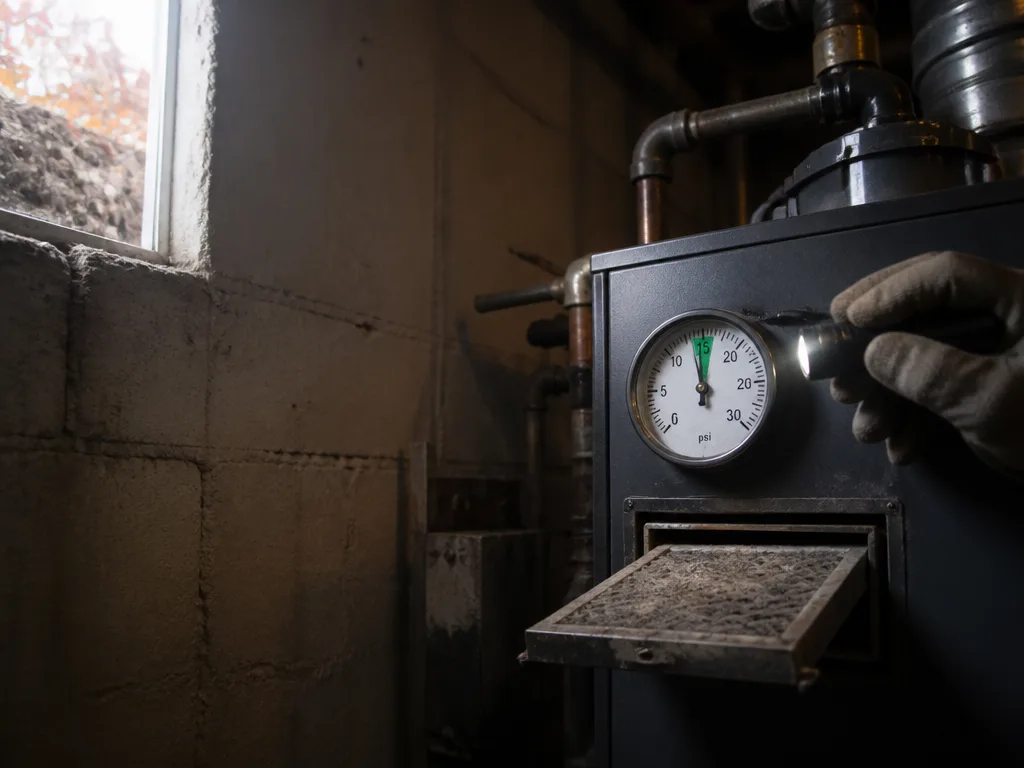
Gas-heat homes have a different list. The burners, the flue and the pilot or igniter all need attention, and a cracked heat exchanger is the kind of problem you want found on a mild October day, not during a cold snap.
A Practical Seasonal Checklist for Glendale Homeowners
You don't need to become an HVAC technician to keep your system healthy. A few habits go a long way, and most of them take less time than watching a single episode of anything.
Spring, before the heat arrives
Swap or clean the filter, then walk the outdoor unit. Make sure the condenser is level, the fins look straight and nothing is growing into the cabinet. This is also a good time for a cooling check, because finding a weak capacitor in April is a much easier conversation than finding it in July.
Summer, when the system runs hardest
Keep the thermostat at a steady setting instead of making big swings during the day. Sudden drops force the system to work hard to catch up. Check the condensate drain line for clogs, since a backed-up drain can shut the system down or leak into the ceiling. Pay attention to ice on the refrigerant lines or the indoor coil. Ice means something is wrong, and running the system harder won't fix it.
Fall, before the cool nights
Heating systems get their turn now. Run the heat for a few minutes and watch for odd smells, rattles or a burner that flickers. Clear the outdoor unit again, since fall winds bring their own debris.
When to Call AC Repair Glendale
Most small issues are fine to handle with a filter change and some cleaning. The signs that mean it's time to call are the ones that involve the system struggling: a unit that runs for hours without dropping the indoor temperature, a sudden jump in your electric bill with no change in habits, water pooling near the indoor unit, or a burning smell from the air handler.
Glendale homes take a beating from the heat and the monsoon, and the systems inside them take the same beating. Give your equipment a seasonal look, and when something feels off, call AC Repair Glendale. Our team will sort out what's happening and walk you through the options, so you aren't guessing through the next heat wave.