Boilers are less common in Glendale than central air, but plenty of older homes and a few newer builds still rely on them for radiant floor heat or hot water. When one needs replacing, people often ask us the same question: how much of this can I do myself? It is a fair question. Some of the work is simple. Some of it can hurt you, and a few mistakes can damage the whole system. Here is how we think about the line at AC Repair Glendale.
Where the line sits
A boiler installation has two kinds of tasks. The first kind is preparation and cleanup, the stuff that happens around the unit. The second kind touches gas, combustion air, water pressure, or electrical circuits. Preparation is mostly yours to handle. The second kind is not, at least not without training, the right tools, and the permits that Glendale requires for this type of work.
If you are unsure which bucket a task falls into, assume it belongs to the second bucket. Guessing wrong on a gas line or a flue is a much bigger problem than waiting a few extra days for a professional visit.
Tasks a homeowner can reasonably handle
These are the jobs we are comfortable with homeowners doing, as long as the power and gas are off and the unit has cooled completely:
- Clearing the space around the boiler so nothing is stored within the clearance the manufacturer lists on the rating plate.
- Moving stored boxes, paint cans, and cleaning supplies away from the unit so a service visit is not delayed by a crowded utility area.
- Measuring the room and writing down the existing unit's model and serial number before anyone shows up. That single step saves a lot of back and forth.
- Taking photos of the current setup, including the markings on the data plate and the layout of the existing lines and vents.
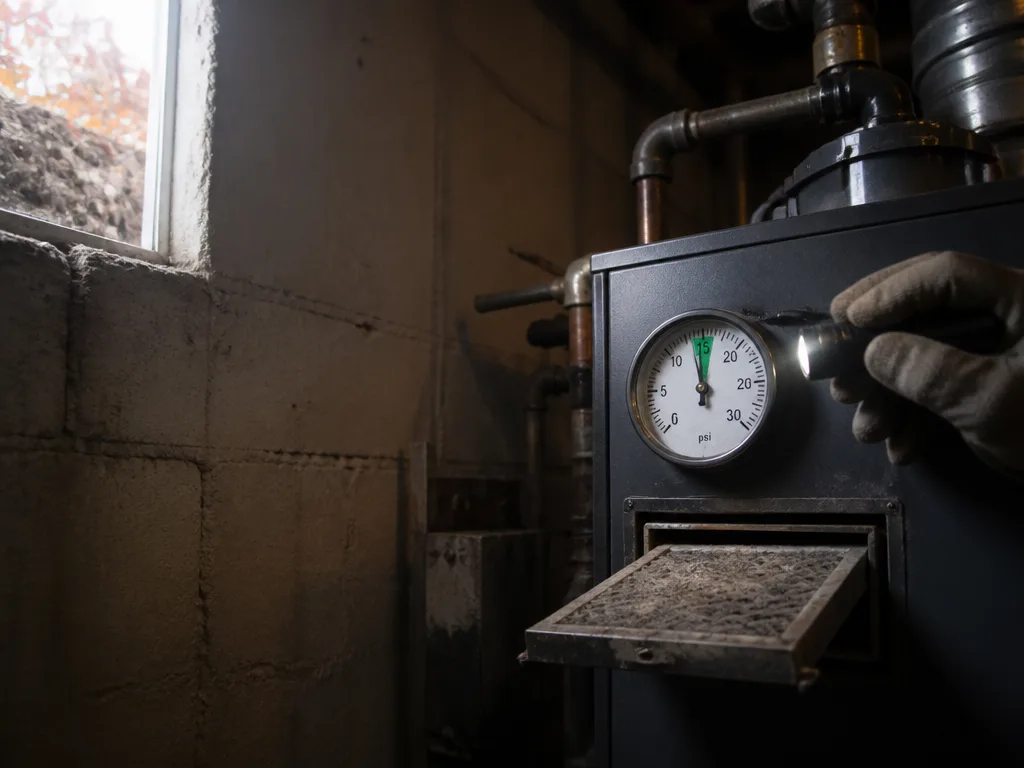
- Draining a small amount of water from a radiator bleed valve, if your system has them, and checking the pressure gauge reading against the number printed on the unit.
Notice what is missing from that list. Nothing on it requires opening a gas connection, adjusting a flame, or touching wiring. That is intentional.
Work that belongs to an HVAC technician
Some parts of a boiler job look straightforward on video, and that is exactly why people get hurt or damage equipment. Leave these to a licensed professional:
Gas connections and leak testing
Any time a gas line gets disconnected, reconnected, or extended, the joints need proper testing. A small leak can sit quietly for weeks. If you smell rotten eggs or something sulfur-like near the unit, leave the house, do not switch lights on or off, and call your gas utility from outside. Then call us once the area is safe.
Venting and combustion air
Boilers push exhaust gases out through a vent, and the vent has to slope, seal, and terminate in the right place. A venting mistake can send carbon monoxide into living space. Our HVAC technicians check the vent path, the combustion air supply, and the draft before a system goes back into service. That is not a step to shortcut.
Water connections and pressure
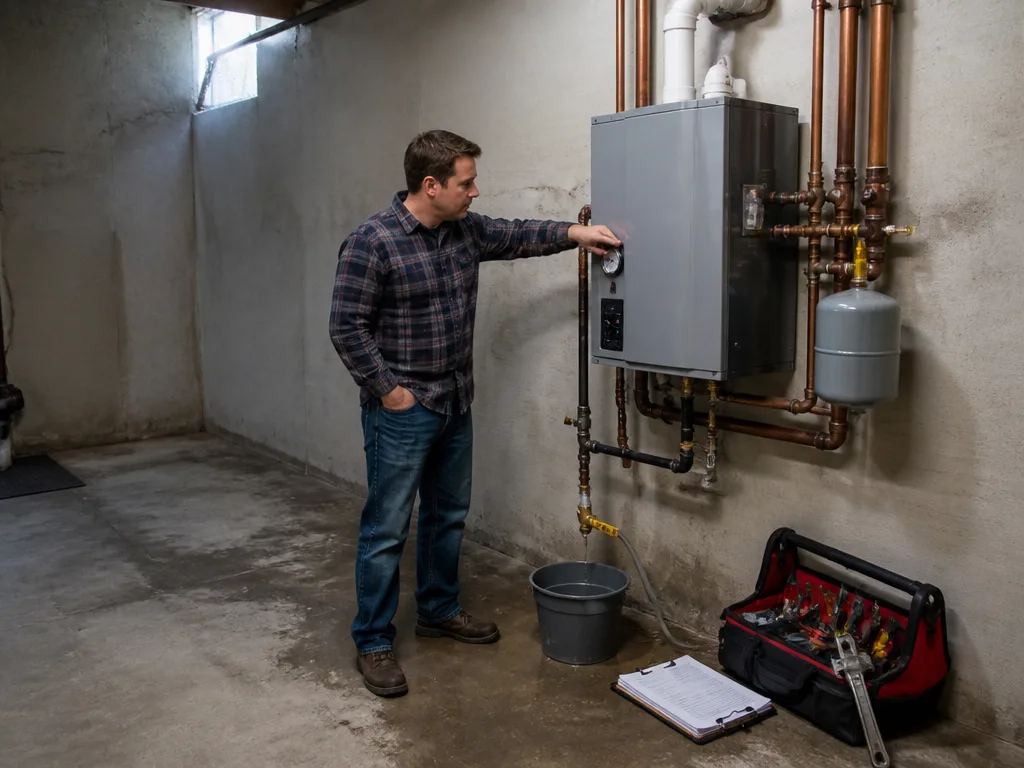
Hydronic systems depend on correct fill pressure, expansion tank sizing, and a working pressure relief valve. Getting these wrong can crack a heat exchanger or push water where it should not go. Adjusting the fill valve by feel is how small problems become expensive ones.
Electrical wiring and controls
Most boilers run on line voltage for the circulator and ignition, and the controls talk to thermostats or zone valves on low voltage. Mixing those up is a fast way to ruin a control board. Anything beyond swapping a battery in a wireless thermostat belongs to a pro.
Signs it is time to call a professional
Even if you started the job yourself, stop and call us when any of these show up:
- The pressure gauge keeps dropping between fills, which usually means a leak somewhere in the system.
- The unit makes banging or rumbling sounds that did not exist before, often a sign of trapped air or scale buildup.
- You see soot, scorch marks, or a yellowish flame where you expect a clean blue one.
- Rooms heat unevenly even after bleeding the radiators, which can point to a circulator or zone problem.
- Anyone in the home has headaches, nausea, or dizziness while the boiler is running. Shut it down and get fresh air first, then call.
Permits matter too. In Glendale, replacing a boiler usually requires inspection, and the inspector will want to see the gas, venting, and electrical work documented properly. An unpermitted install can cause headaches when you sell the home or file an insurance claim, so ask whoever is doing the work how they handle the paperwork.
How to plan the job without overthinking it
Start with a clear list of what you want fixed, what the current system does, and what you hope to change. Write it down before you call. Note the rooms that stay cold, how often the unit cycles, and whether hot water runs out. Those details help our team understand the job before we ever step into the mechanical room.
When you are ready to talk through a boiler replacement or a repair, give AC Repair Glendale a call. We will walk you through what the job involves, which parts you can prepare for yourself, and which parts we will handle from start to finish. Calling is the way to reach us, and we are happy to answer questions about your specific system over the phone.